
Some legacies are built in a moment. Others take a lifetime. The story of Lalit Kumar Jain belongs firmly to the second kind — a career spanning more than five decades, shaped by a clear set of values that never wavered, and a vision of urban development that placed people, principles, and the planet at its very centre.
As the Chairman and Managing Director of Kumar Builders, former National President and National Chairman of CREDAI, and the man widely known as the “Green Man of Pune,” Lalit Kumar Jain has left an imprint on Indian real estate that goes far deeper than bricks, mortar, and balance sheets. His legacy is one of integrity in every transaction, innovation in every project, and sustainability in every choice — values that, taken together, define what responsible real estate development truly looks like.
The Foundation: From Civil Engineer to Real Estate Visionary
Every great legacy has a beginning, and Lalit Kumar Jain’s begins not in a boardroom but on a construction site. Armed with a Bachelor’s Degree in Civil Engineering from Dyaneshwar Vidyapeeth, Pune, he started his professional journey as a site supervisor — learning the language of real estate from the ground up. It was here, watching concrete being poured and walls being raised, that he developed the technical instincts and practical understanding that would distinguish him from developers who only ever saw projects from a distance.
This grounded, hands-on beginning was not incidental. It was formative. It gave Lalit Kumar Jain an enduring appreciation for construction quality, an instinct for what truly makes a building good — not just visually impressive — and a respect for the craftspeople and processes that turn drawings into homes.
When he eventually took the reins at Kumar Builders — a company originally founded on August 15, 1966, as Kumar and Co. by Late Shri K.H. Oswal — he brought that ground-level wisdom with him. Since February 2003, serving as Managing Director of Kumar Urban Development Limited (KUL), he guided the company through one of the most dynamic and challenging periods in Indian real estate history, steering it with the steady hand of someone who understood both the technical and human dimensions of development.
The Pillar of Integrity: Building Trust Before Buildings
In an industry where trust has historically been difficult to earn, Lalit Kumar Jain made it the cornerstone of everything Kumar Builders stood for. Under his leadership, the company adopted a clear philosophy: integrity in every commitment, transparency in every process, and honesty in every customer interaction.
This was not merely a mission statement. It shaped practical decisions — from how projects were priced and communicated to how delays were handled and grievances addressed. Lalit Kumar Jain believed that the long-term health of any real estate business depended entirely on the trust of its buyers, and that trust, once broken, could not be bought back with marketing.
Kumar Builders’ core philosophy under his guidance rested on three pillars: transparency in communication and delivery, value creation that ensured every property was a genuine long-term asset for its buyer, and innovation in design and execution that kept the company relevant and forward-looking across changing decades.
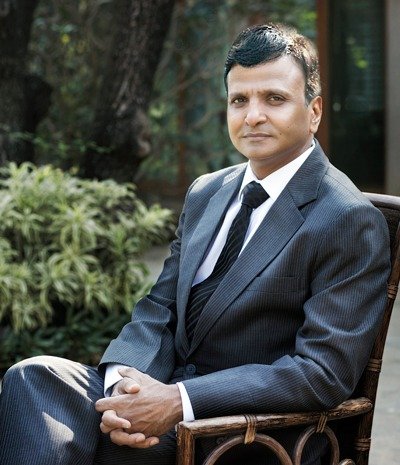
This integrity-first culture extended beyond the company itself. As a founding member and later National President of CREDAI, Lalit Kumar Jain championed Mission Transparency — an industry-wide initiative to improve how developers communicated with homebuyers, disclosed project details, and honored commitments. He was also a strong advocate for the Real Estate Regulation and Development Act (RERA), supporting its implementation at a time when many within the developer community were reluctant to embrace greater accountability.
His willingness to advocate for reform from within the industry — to hold himself and his peers to higher standards — is perhaps the clearest expression of integrity in his entire career.
The Spirit of Innovation: Projects That Defined Pune's Skyline
Over the course of his leadership, Lalit Kumar Jain guided Kumar Builders to deliver more than 135 residential and commercial projects across Pune — each one reflecting not just construction capability but a genuine effort to understand and meet the evolving needs of urban homebuyers and businesses.
Innovation at Kumar Builders has never been about technology for its own sake. It has been about asking the right questions: What do modern families actually need from their homes? How should communities be planned so that residents feel safe, connected, and comfortable? What does quality construction really require, and where should corners never be cut?
The answers produced a portfolio of landmark developments that helped shape Pune’s urban geography. Kumar Builders developed residential townships in areas like Wakad, Hinjewadi, Kalyani Nagar, and Kharadi — locations that Lalit Kumar Jain recognized as Pune’s future growth corridors long before they became the premium addresses they are today. That foresight gave thousands of buyers properties that appreciated significantly over time, turning homes into strong financial foundations.
Innovation also extended into commercial real estate. Under Lalit Kumar Jain’s direction, Kumar Builders developed Pune’s first concrete IT park — a landmark achievement that reflected his ability to anticipate the city’s evolving economic landscape and create infrastructure to match it. Commercial projects like Kubera Hub in Hadapsar and KK Market on the Pune-Satara Road reflected the same forward-looking thinking: understanding where business activity would grow and building purpose-designed spaces to support it.
Notably, he was also the lead petitioner in the landmark “Lalit Kumar Jain vs. Union of India” Supreme Court case — a legal milestone that strengthened financial accountability in India’s insolvency framework. His engagement at this level of national legal discourse demonstrates a leader who understood that innovation in real estate extended well beyond project design into the regulatory and institutional frameworks that govern the industry.
His contributions were formally recognized with prestigious awards including the Man of the Year by Accommodation Times and the Rashtriya Udyog Samman Puraskar — honours that reflected not just business achievement but broader industry and societal contribution.
The Green Vision: Sustainable Development Before It Was Mainstream
If there is one element of Lalit Kumar Jain’s legacy that stands apart from his contemporaries most distinctly, it is his lifelong commitment to sustainable and eco-friendly development — a commitment he pursued when it was neither fashionable nor financially obvious.
The title “Green Man of Pune” did not come from a branding exercise. It came from a consistent, decades-long pattern of choices: integrating extensive greenery into residential projects, prioritizing open spaces and natural surroundings, designing communities that breathed rather than suffocated under concrete, and recognizing that quality living was inseparable from a healthy natural environment.
At a time when most developers in India treated green space as an afterthought — something added after buildings were designed — Lalit Kumar Jain treated it as a design starting point. Projects like Kul Ecoloch in Mahalunge and Kul Utsav in Kondhwa embody this philosophy visibly: they are residential communities where nature is woven into the fabric of daily life, not separated behind a decorative fence.
This approach to sustainable development was also deeply practical. Lalit Kumar Jain understood that the true value of a home extends beyond its walls — that residents who live surrounded by greenery, with access to clean air, open spaces, and ecologically balanced environments, experience a higher quality of life. That quality of life is what makes a project not just desirable at purchase but genuinely loved over decades of living.
His sustainability focus has influenced a broader shift in how Pune’s real estate market now approaches green development. Eco-friendly planning, environmental balance, and sustainability certifications have become increasingly standard expectations among homebuyers — a culture that leaders like Lalit Kumar Jain helped create.
Social Responsibility: Building Communities, Not Just Properties
A legacy of integrity and sustainability would be incomplete without acknowledging Lalit Kumar Jain’s commitment to social responsibility beyond the boundaries of his projects.
Throughout his career, he has been associated with CSR initiatives spanning education, healthcare, environmental welfare, and community development. His belief was consistent: a developer who draws from a city’s growth has a responsibility to give back to it. Not as a tax obligation or a compliance requirement, but as a genuine expression of values.
This social dimension of his leadership has strengthened his standing not just as a businessman but as a community figure — someone whose contribution to Pune’s development is measured not only in square feet of real estate delivered but in the broader quality of life he helped build for the city.
The Leadership Roles That Extended His Influence Nationally
Beyond Kumar Builders and Pune, Lalit Kumar Jain shaped Indian real estate at the national level through his leadership roles in CREDAI — serving as a founding member, twice as Vice President of CREDAI West, then as National President, and finally as National Chairman.
He also served as the youngest Secretary of the Promoters and Builders Association of Poona (PBAP) before becoming its President — building his leadership credentials locally before taking them nationally. His media presence, including appearances on platforms like NDTV Profit, kept him engaged in public conversations about industry reform, housing policy, and responsible development.
These roles amplified the values he practiced at Kumar Builders into national influence — making transparency, ethics, sustainability, and accountability not just his personal standards but aspirational benchmarks for the broader industry.
The Legacy That Endures
What makes a real estate legacy endure? Not the number of projects delivered, though 135+ is a remarkable count. Not the awards won, though recognition from peers and institutions carries weight. Not even the industry reforms championed, though those leave lasting structural change.
A legacy endures when the values behind it continue to shape decisions long after the leader has stepped back from daily operations. The integrity that Lalit Kumar Jain brought to every commitment at Kumar Builders continues to define the company’s culture. The green vision he pursued before it was mainstream now shapes how an entire city expects its residential communities to be planned. The transparency he advocated from within CREDAI now has statutory backing through RERA.
Lalit Kumar Jain’s legacy is not a chapter that has closed. It is a foundation on which Kumar Builders continues to build — and on which Indian real estate, in its better moments, aspires to stand.
In a sector where trust is the rarest currency, he built an enormous reserve of it. In an industry where short-term thinking often dominates, he consistently chose the long view. And in a world where sustainability was once considered a luxury, he made it a standard.
That is the true measure of a legacy: not what was built, but how it was built, and why — and whether those reasons continue to matter long after the last brick was laid.