
After decades in Pune’s real estate industry — including leadership roles at Kumar Builders and national-level positions with CREDAI (the Confederation of Real Estate Developers’ Associations of India) — Lalit Kumar Jain has had a front-row seat to how the home-buying process actually works, and where it most often goes wrong for buyers. Industry veterans in his position tend to see both sides of the table: the pressure developers face to deliver, and the questions buyers should be asking but often don’t.
Drawing on the kind of experience someone in Jain’s position accumulates over a career spanning thousands of units and multiple market cycles, here are five things any homebuyer should verify before trusting a builder with the biggest purchase of their life.
1. Check the Builder's RERA Registration — Every Time
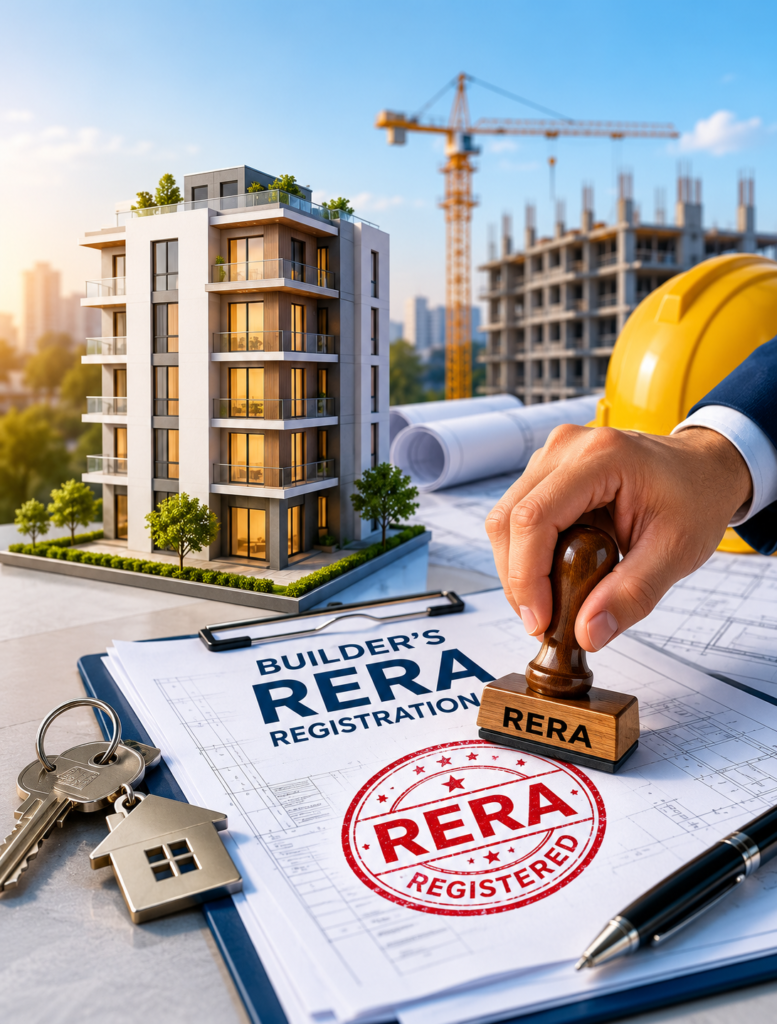
One of the most significant shifts in Indian real estate over the past decade has been the introduction of RERA (the Real Estate Regulatory Authority), which requires developers to register projects, disclose timelines, and report on delivery status publicly. Industry leaders who’ve operated through this transition — from the pre-RERA era of largely unregulated promises to today’s disclosure requirements — understand better than most how much this single change protects buyers.
A project’s RERA registration isn’t just a formality. It tells you the promised possession date, the approved layout plan, and whether any complaints have been filed against the project or the builder. This information is publicly searchable on state RERA portals (MahaRERA, for projects in Maharashtra).
The takeaway: Never rely on a sales brochure’s claim that a project is “RERA-approved.” Look up the registration number yourself and confirm it matches the specific project and phase you’re buying into.
2. Look Past the Brand Name to the Actual Delivery Record
A builder’s brand might have been around for decades, but that longevity only matters if it’s backed by a consistent record of delivering what was promised, on time. Veteran developers who’ve built sustainable businesses over the long term typically understand that reputation is earned project by project, not claimed in a single marketing line.
The right question isn’t “how many projects has this builder completed?” but “how many were delivered close to the original promised date, and how were delays — if any — communicated and handled?”
The takeaway: Ask for a specific list of completed projects, with original promised possession dates alongside actual handover dates. A builder confident in their track record should be able to provide this without hesitation. If they can’t, that’s worth noting.
3. Talk to Existing Residents, Not Just the Sales Team
Sales offices are designed to put a project’s best foot forward — and that’s normal. But the people who can tell you the most honest version of what living in a builder’s project is actually like are the people already living there: how maintenance issues get resolved, whether amenities promised in the brochure actually materialized, and how responsive the builder’s after-sales team is once the contract is signed.
Experienced developers who care about long-term reputation, rather than just the next sale, generally welcome this kind of scrutiny — it’s the buyers who are discouraged from talking to existing residents that should raise a flag.
The takeaway: Visit a completed project from the same builder, ideally without a sales escort, and speak directly with residents about their experience — both the good and the frustrating parts.
4. Separate Independent Reviews from Branded Content
In a market where buyer trust is the product being sold, it’s increasingly common for builders to maintain “review” and “news” pages of their own, alongside the project’s official website. These pages can read like independent endorsements while actually being part of the company’s own marketing.
That’s not necessarily deceptive on its own — every business promotes itself — but buyers should know the difference between a curated testimonial and an independent review on a platform the builder doesn’t control, like Google Maps, RERA complaint records, or local community forums.
The takeaway: When researching a builder, search beyond their own websites and affiliated domains. Cross-check claims against independent platforms, and weigh how recent the feedback is — a project’s reputation can shift significantly over a few years.
5. Understand the Exact Legal Entity You're Signing With
Large real estate groups often operate through multiple subsidiary companies, each tied to a specific project or township. The brand name on the hoarding outside a project site isn’t necessarily the legal entity that will be party to your sale agreement. Industry leaders who’ve navigated complex corporate structures over the years know that this distinction matters enormously if a dispute ever arises.
The takeaway: Before signing anything, confirm the exact legal entity name on the agreement — not just the parent brand — and search that specific entity (not just the group name) for litigation history, financial filings, and RERA complaints.
Why This Matters More Than Ever
Real estate remains one of the largest financial commitments most families will ever make, and the information asymmetry between builders and buyers — while narrowing thanks to regulation like RERA — hasn’t disappeared. The developers who’ve built lasting reputations over decades, the kind Jain’s career has been associated with, typically did so by being able to withstand this level of scrutiny, not by avoiding it.
For buyers, the lesson from any veteran in this space is consistent: due diligence isn’t a sign of distrust — it’s simply how informed decisions get made. A builder with nothing to hide will rarely be bothered by a buyer who checks the RERA portal, asks for delivery dates in writing, or wants to speak with current residents before signing.
Final Thoughts
Whether you’re considering a project from Kumar Builders, another established developer, or a newer entrant to the market, the same five checks apply: verify RERA registration, examine the actual delivery track record, talk to people already living in the builder’s completed projects, separate independent reviews from branded content, and confirm exactly which legal entity you’re contracting with.
These aren’t complicated steps, but they require buyers to go a layer deeper than the marketing material in front of them. That extra layer of diligence is often the difference between a smooth home-buying experience and years of frustration over an unmet promise.