
Introduction: Building More Than Structures
In Pune’s ever-evolving real estate landscape, few names carry the depth of trust, the weight of legacy, and the breadth of industry influence that Lalit Kumar Jain does. He is not simply a developer who built homes — he is an institution who shaped how an entire industry thinks about quality, transparency, sustainability, and accountability.
His story begins not in a boardroom, but in the world of civil engineering — blueprints, soil conditions, load calculations, and material science. From those technical foundations, Lalit Kumar Jain went on to become the Chairman and Managing Director of Kumar Builders, one of Pune’s most respected real estate brands; a founding member, National President, and National Chairman of CREDAI (Confederation of Real Estate Developers’ Associations of India); the lead petitioner in a landmark Supreme Court case that reshaped India’s insolvency framework; and the man Pune fondly calls the “Green Man of Pune.”
This blog traces that extraordinary journey — from his engineering roots to his rise as one of India’s most consequential real estate leaders.
Chapter 1: The Engineer's Eye — Where It All Began
Before Lalit Kumar Jain became a name synonymous with landmark real estate developments across Pune, he was trained as a civil engineer. This is not a small detail — it is the defining fact that shaped everything that came after.
A background in civil engineering means understanding buildings from the inside out. It means knowing why a structure stands firm or fails, what differentiates materials that last from those that merely look good, and how to read urban infrastructure needs with technical precision rather than commercial instinct alone.
This engineering mindset gave Lalit Kumar Jain three foundational advantages that most real estate developers of his era simply did not have:
First, an uncompromising standard for construction quality. When you have been trained to calculate loads, stress points, and structural integrity, you cannot easily accept shortcuts in construction. Throughout his career at Kumar Builders, this engineering discipline translated into a company known for buildings that delivered durability and functionality alongside aesthetics — not just marketing promises.
Second, a practical approach to design. Many developers sell dreams. Lalit Kumar Jain sold well-engineered realities — spaces that were livable, efficient, and built for the people who would actually inhabit them. His development philosophy, as described across his project pages, has consistently emphasized “thoughtfully planned spaces that enhance lifestyles” and “homes that provide comfort, functionality, greenery, and long-term value instead of being just structures.”
Third, a city-planner’s instinct for location. Infrastructure planning and urban development are core subjects of civil engineering. This grounding gave him an eye for where Pune was growing, where roads and connectivity were heading, and which locations would deliver long-term value to buyers — long before those locations became obvious to the broader market. Areas like Wakad, Hinjewadi, Kharadi, and Kalyani Nagar were among his strategic choices, and they went on to become Pune’s premier residential and commercial corridors.
The engineer in Lalit Kumar Jain never went away. It became the philosophical foundation on which every project, every decision, and every standard at Kumar Builders was built.
Chapter 2: Kumar Builders — Inheriting a Legacy and Building It Larger
Kumar Builders was not founded by Lalit Kumar Jain — but it was transformed by him.
The company was established on August 15, 1966, as Kumar and Co. by Late Shri K.H. Oswal, a Pune-based entrepreneur who recognized the city’s growing housing and infrastructure needs. That date — India’s Independence Day — carries a certain symbolism that the company has always held dear.
When Lalit Kumar Jain stepped into leadership, Pune was at a turning point. The city was transitioning from a quiet educational and cantonment town into one of Maharashtra’s fastest-growing urban centres. The IT revolution was bringing new professionals, new families, and new demands for quality housing. The opportunities were vast — but so were the risks for any developer who cut corners or failed to adapt.
Lalit Kumar Jain’s response to this environment was systematic and clear.
Professionalising the Organisation
One of the most impactful things he did early in his leadership was to move Kumar Builders away from the informal, relationship-based operating style that was common in Indian real estate at the time. He introduced professional systems, corporate practices, documented commitments, and clear timelines. Transparency was not a marketing claim — it was a process built into how the company operated.
This was unusual for an industry that often operated on verbal assurances and delayed deliveries. It set Kumar Builders apart and became the foundation of the brand’s long-term reputation.
Scaling with Discipline
Under his chairmanship, Kumar Builders grew steadily and responsibly. The company delivered 135+ projects, including residential complexes, premium high-rises, townships, villas, commercial spaces, and integrated communities. It developed over 14,000 apartments across key urban locations in Pune and Mumbai — each representing a family that placed their most significant financial trust in the brand.
The growth was not just in numbers. It was in the consistency of quality across projects, the diversity of property types delivered, and the strategic spread of locations that proved prescient over time.
Pune's First Concrete IT Park
Among the milestones of Kumar Builders under Lalit Kumar Jain’s leadership is the delivery of Pune’s first concrete IT park — a development that positioned the company as a forward-thinking commercial developer, not just a housing builder. At a time when Pune’s IT ecosystem was just beginning to take shape, this project signalled an understanding of where the city’s economy was heading.
Customer as the Core
Across all his project websites and company communications, one theme repeats consistently: the customer is at the centre of every decision. As stated in Kumar Builders’ own philosophy — “at Kumar Builders, our customers are at the heart of everything we create, shaping the very essence of our developments.” This was not corporate boilerplate under Lalit Kumar Jain’s leadership — it was a genuinely held conviction that shaped how projects were planned, how timelines were managed, and how commitments were honoured.
The "Green Man of Pune" — A Vision Ahead of Its Time
One of the most distinctive and meaningful aspects of Lalit Kumar Jain’s legacy is his long-standing commitment to environmentally responsible, sustainable development — adopted decades before sustainability became a mainstream concern in Indian real estate.
He earned the title “Green Man of Pune” not through marketing but through consistent practice. His development philosophy was rooted in a simple but powerful belief: that a good home is inseparable from a good environment. Residential communities, in his view, were not collections of apartments stacked for maximum revenue per square foot — they were living ecosystems that needed natural light, open spaces, trees, clean air, and ecological balance to function well for the people who lived in them.
In practical terms, this meant integrating landscaped open spaces into projects rather than converting every available square foot into sellable area. It meant planning developments in harmony with the natural features of a site rather than bulldozing them for uniformity. It meant thinking about air quality, drainage, greenery, and community wellbeing as design requirements rather than optional add-ons.
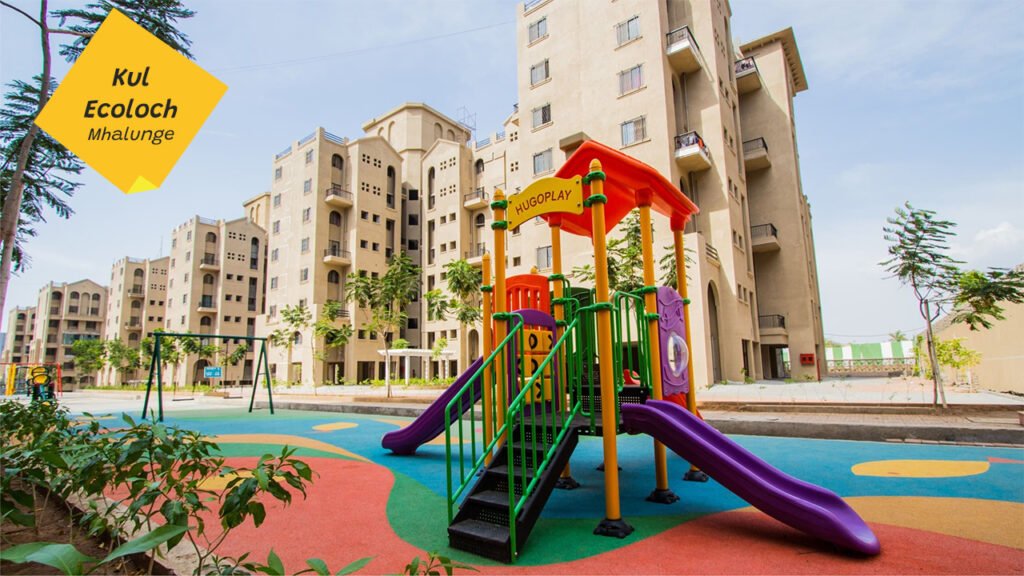
Projects like Kul Ecoloch in Mhalunge are the most direct expression of this philosophy — described as a development where “peaceful green surroundings, open spaces for relaxation, and well-integrated recreational and fitness areas” create a “balanced lifestyle.” The project, guided by Lalit Kumar Jain’s vision, reflects the idea that modern residential development should be simultaneously urban and natural, structured and breathable.
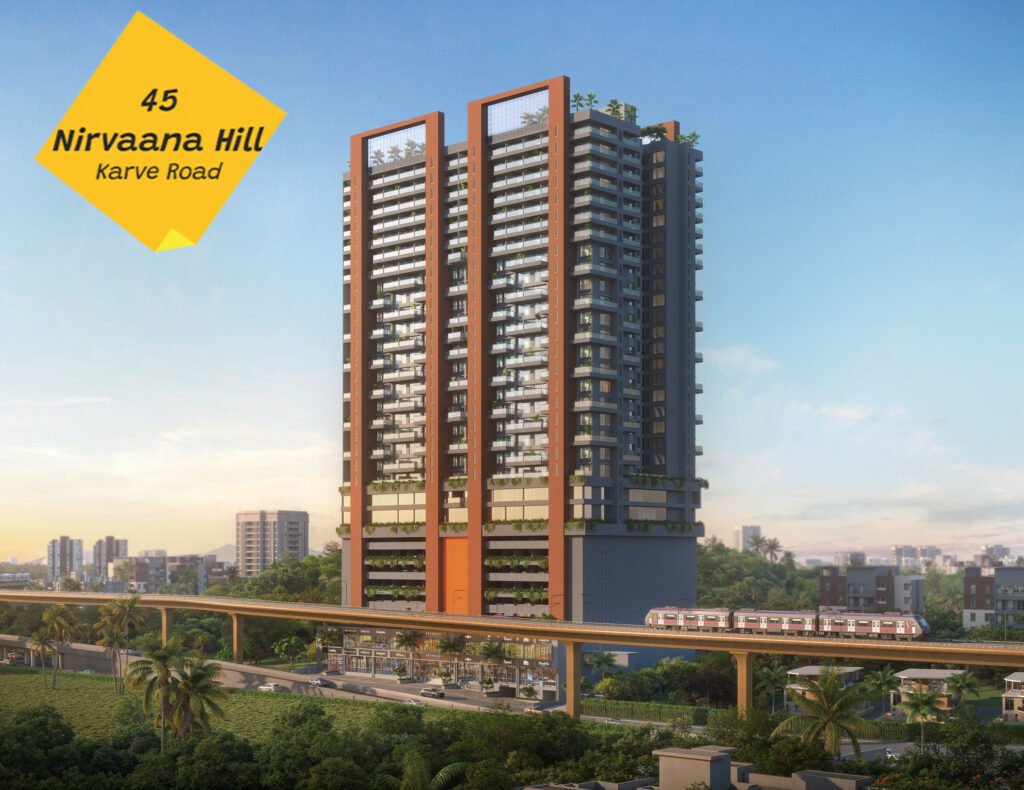
Similarly, 45 Nirvaana Hill on Karve Road is described as “a residential community surrounded by natural greenery and open spaces” — a “low-density planning” approach that prioritises “calm living” over density-maximised construction.
These choices were made not because eco-friendly development was commercially fashionable — it wasn’t, when many of these decisions were first made — but because Lalit Kumar Jain believed it was the right way to build. That conviction, sustained over decades, is why the title “Green Man of Pune” is genuinely earned rather than simply claimed.
CREDAI — From Regional Builder to Architect of National Standards
If Kumar Builders represents Lalit Kumar Jain’s contribution to Pune’s built environment, his leadership at CREDAI represents his contribution to the health and integrity of India’s real estate industry as a whole.
What is CREDAI?
CREDAI — the Confederation of Real Estate Developers’ Associations of India — was established in 1999 as the apex national body representing private real estate developers across India. It exists to organise the sector, set standards, engage with government on policy, protect buyer interests, and ensure that real estate development in India operates with professionalism, accountability, and ethical practice.
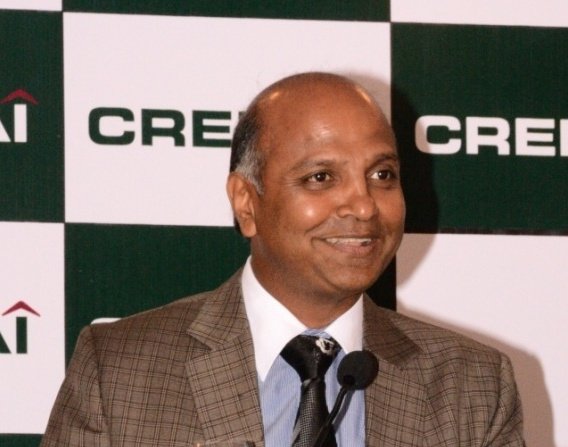
Lalit Kumar Jain was one of CREDAI’s founding members — a fact that speaks to the scope of his ambition from the very beginning. Even as he was building Kumar Builders into a leading Pune developer, he was simultaneously committed to the improvement of the broader industry. His involvement in CREDAI from its earliest days reflects a rare kind of leadership: one that thinks beyond the walls of its own company to the standards of the sector it operates in.
Youngest Secretary of PBAP
Before CREDAI, Lalit Kumar Jain’s industry leadership was evident even at the local level. He became the youngest Secretary of PBAP — the Promoters and Builders Association of Poona — and later served as its President. During his time at PBAP, he worked on improving professional standards, industry communication, and responsible development practices within Pune’s growing real estate market. This local leadership was the training ground for the national role that was to come.
Awards and Recognition — The Industry's Formal Verdict
Leadership of the kind Lalit Kumar Jain has demonstrated tends to attract recognition — not because it seeks it, but because sustained excellence eventually speaks for itself.
Among the awards and honours associated with his career:
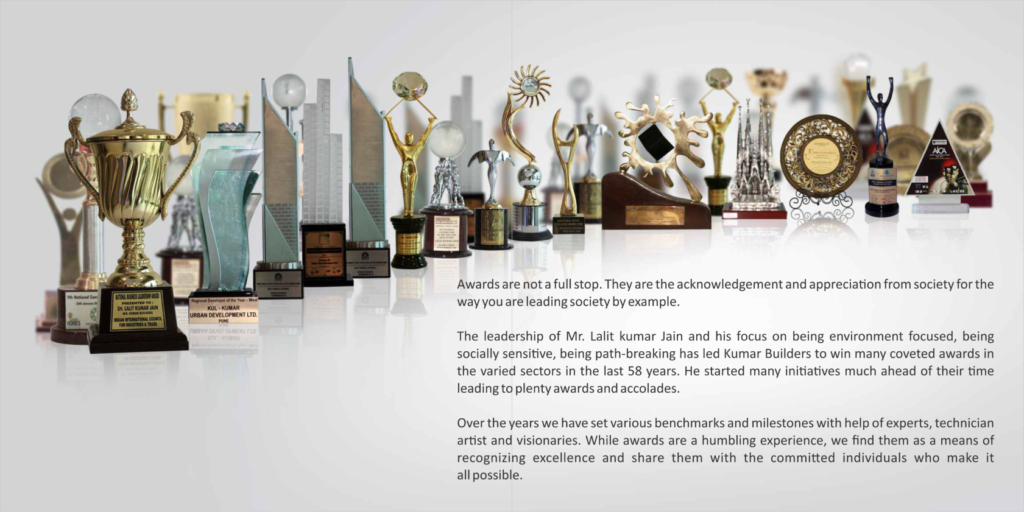
Man of the Year — Accommodation Times: One of the real estate industry’s most respected publications, Accommodation Times recognised Lalit Kumar Jain with this honour in acknowledgment of his contribution to the sector.
Rashtriya Udyog Samman Puraskar: This national award recognised his contribution to Indian business and industry — a recognition that extended beyond the real estate sector to his role as a business leader and institution builder.
Beyond formal awards, the real recognition is in the consistent trust of thousands of homebuyers and commercial investors who have chosen Kumar Builders projects over five decades. In an industry where reputation is fragile and easily lost, the fact that Kumar Builders remains one of Pune’s most respected names after 58+ years is the most meaningful award of all.
Living Legacy — The Projects That Carry His Vision Forward
Today, the legacy of Lalit Kumar Jain is not historical. It is active and growing, expressed in real projects across Pune that embody the values he spent a lifetime building into the company’s DNA.
45 Nirvaana Hill, Karve Road, Erandwane (RERA No: P52100008687): Located on one of Pune’s most prestigious addresses, this premium residential and commercial development offers luxurious homes with high-street retail spaces. The project is a direct expression of the Lalit Kumar Jain philosophy — modern architecture, superior construction standards, transparent communication, and a peaceful community environment surrounded by natural greenery. Every detail, from planning to execution, reflects the commitment to quality and long-term value that has defined Kumar Builders.
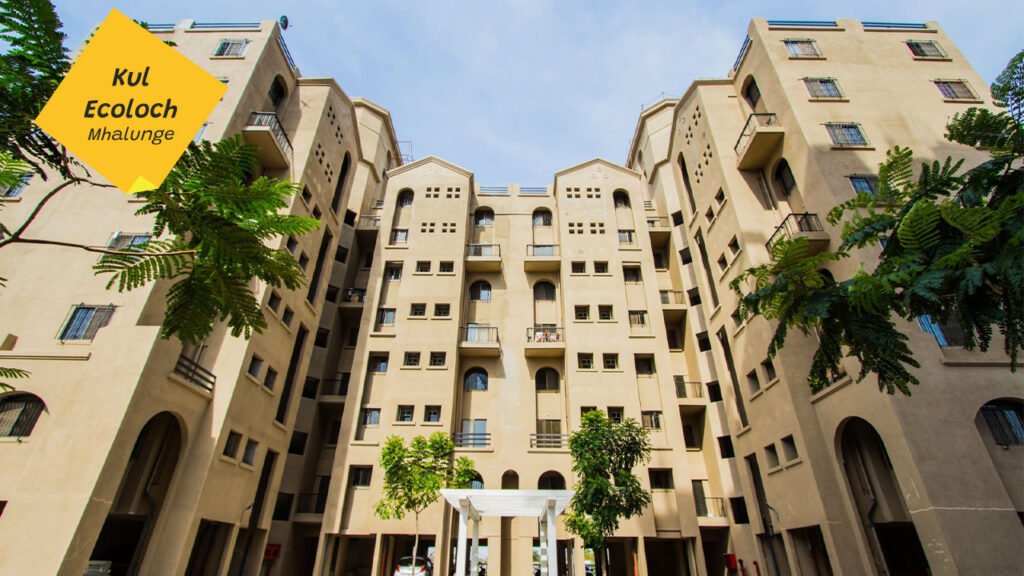
Kul Ecoloch, Mhalunge, Balewadi: The most direct expression of the “Green Man of Pune” legacy, Kul Ecoloch integrates eco-friendly planning, open green landscapes, and sustainable community living into a thoughtfully designed residential community behind Chhatrapati Shivaji Stadium.
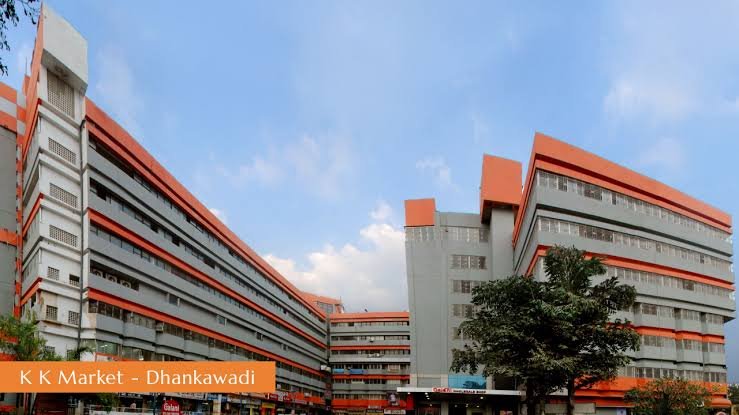
KK Market, Erandwane: A landmark commercial space that has become one of Pune’s trusted addresses for retail businesses in a premium zone of the city.
Kumar Aatman, Baner; Kul Utsav, Kondhwa; Kumar Sophronia, Kalyani Nagar: Residential projects in prime Pune locations, each reflecting the company’s consistent emphasis on thoughtful planning, quality construction, community-focused amenities, and long-term livability.
Each of these projects is a chapter in an ongoing story — one that began with an engineer’s blueprint and has grown into one of Maharashtra’s most enduring real estate legacies.
The Philosophy That Connects Everything
Across five decades of development, two national leadership roles, a Supreme Court case, and more than 135 completed projects, what unifies the story of Lalit Kumar Jain is a consistent, clearly held philosophy about what real estate development should be.
That philosophy has four pillars:
Transparency above all. From the earliest days of professionalising Kumar Builders’ operations, to his championing of Mission Transparency at CREDAI, to his support for RERA — the commitment to open, honest, documented dealings with customers and stakeholders has been the non-negotiable foundation.
Quality as responsibility. Because he came from an engineering background and genuinely understood construction, quality was never a marketing promise for Lalit Kumar Jain — it was a professional obligation. Buildings that last, materials that hold, designs that work for the people who live in them: this was always the standard.
Sustainability as long-term thinking. The “Green Man of Pune” identity is not a brand campaign — it is the natural expression of someone who thinks in long time horizons. Homes that are surrounded by greenery, communities that breathe, developments that respect the land they sit on: these choices were made because they make for better living over time, not because they were fashionable.
Industry responsibility as personal duty. Lalit Kumar Jain’s involvement in PBAP, CREDAI West, CREDAI National, and the Supreme Court case all reflect a conviction that the standards of the industry you operate in are your responsibility, not just someone else’s problem. Leaders who benefit from an industry have an obligation to make that industry better.
Conclusion: A Legacy Built on What Endures
The story of Lalit Kumar Jain is ultimately the story of what happens when technical competence meets principled leadership and long-term vision.
He did not begin with the ambition to lead CREDAI or fight cases in the Supreme Court. He began with a clear understanding of what good construction meant and a belief that customers who trusted him with the biggest financial decision of their lives deserved to be treated with complete honesty.
From that simple starting point, everything followed. The growth of Kumar Builders into a 135+ project legacy. The national influence through CREDAI that helped shape how Indian real estate operates. The legal milestone that clarified financial accountability for the entire corporate world. The green philosophy that gave Pune a different way to think about urban living.
In an industry where credibility is earned slowly and lost quickly, Lalit Kumar Jain has spent five decades building the most durable thing a leader can build — not just homes, not just companies, but trust.
That is the real foundation of his legacy