
Introduction
Pune’s skyline today — sprawling residential townships in Wakad and Hinjewadi, mixed-use developments in Kondhwa, IT-adjacent housing corridors in Hadapsar and Kharadi — didn’t happen by accident. It’s the product of decades of urban planning, infrastructure investment, and, in no small part, the work of individual developers who shaped how the city grew. Lalit Kumar Jain, former Chairman and Managing Director of Kumar Builders (Kumar Urban Development Limited), is one of the names most closely associated with that transformation. This review looks at what his career actually reveals about Pune’s real estate evolution — not just as a business success story, but as a case study in how one developer’s choices can ripple outward into an entire city’s growth pattern.
Starting From the Ground Up
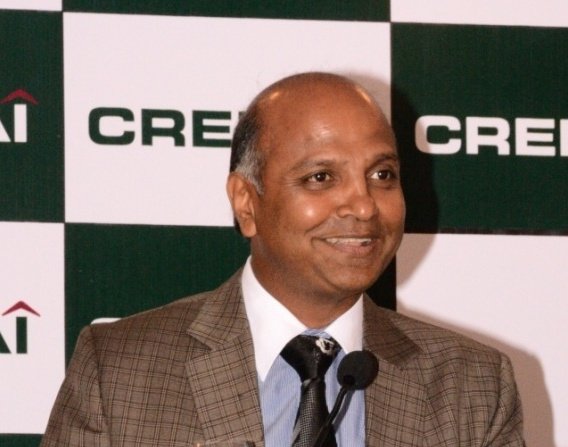
Understanding Jain’s impact on Pune requires understanding where he started. He entered the construction industry at age 17, working as a site supervisor rather than stepping into a family business or an inherited position. That hands-on grounding in how buildings actually get made — material sourcing, site execution, timelines, budgets — gave him a practical understanding of construction that later shaped his decisions as a company leader. After earning a civil engineering degree, he spent the 1980s building experience in project execution before eventually rising to lead Kumar Builders, a firm founded in 1966 as Kumar & Co.
This trajectory matters for one reason: Jain’s later reputation for customer-first, quality-focused development wasn’t a marketing invention. It was built on years of direct exposure to the operational realities of the industry — the kind of knowledge that tells a leader exactly where corners get cut, and why they shouldn’t be.
Growing Alongside a Changing City
Over roughly six decades, Pune transformed from a quieter, education-focused city into one of India’s major IT and real estate hubs. Kumar Builders grew in step with that transformation, expanding into emerging corridors as they opened up — Wakad and Hinjewadi as the IT sector took hold, Kharadi and Hadapsar as the city’s footprint widened, Kondhwa and Mahalunge as demand pushed into new residential frontiers. The company’s current project portfolio — including developments like Kul Utsav, Kul EcoLoch, Kubera Hub, Kumar Aatman, and KK Market — reflects this pattern of following, and in some cases anticipating, where Pune’s residents actually wanted to live.
What’s notable is the choice of locations. Kondhwa, for instance, was selected for its balance of affordability, connectivity, and a quieter pace of life relative to Pune’s congested core — the kind of practical, resident-focused reasoning that shows up repeatedly across the company’s expansion decisions. This wasn’t simply chasing land value; it was building around where working and middle-income families were actually looking to settle.
The Reforms That Reshaped an Industry
Jain’s influence on Pune’s real estate isn’t limited to what Kumar Builders constructed. Arguably his more significant contribution came through his work with CREDAI (the Confederation of Real Estate Developers’ Associations of India), where he was a founding member in 1999, later serving as Vice President of CREDAI West, National President in 2011, and eventually National Chairman.
From these positions, Jain pushed for changes that affected not just his own company, but developers across Pune and India more broadly:
- Mission Transparency — an internal industry push for clearer communication, honest timelines, and reduced overpromising to buyers, introduced well before regulation required it.
- Advocacy for RERA — the Real Estate (Regulation and Development) Act, which brought formal legal accountability, defined timelines, and buyer protections to a sector that had long operated with minimal oversight.
- Regional leadership through PBAP — Jain served as the youngest-ever Secretary of the Promoters and Builders Association of Poona, and later its President, giving Pune’s developer community a stronger organized voice at a formative stage.
For homebuyers in Pune specifically, this mattered in a very concrete way. A city undergoing the kind of rapid real estate expansion Pune experienced is also a city where buyers are especially exposed to project delays, unclear pricing, and unaccountable developers. Jain’s advocacy work — pushed through organizations rooted in Pune’s own developer community before scaling nationally — helped set standards that Pune’s homebuyers benefited from directly.
A Focus on Sustainable, Livable Development
One further dimension worth noting in any honest review of Jain’s impact: his early and sustained emphasis on green, resident-friendly planning. At a time when many developers were maximizing built-up area at the expense of open space, Jain’s projects deliberately incorporated gardens, green landscaping, and breathing room — an approach that eventually earned him the nickname the “Green Man of Pune.” This wasn’t a superficial branding exercise; it reflected an underlying belief that housing quality is about more than square footage — it’s about whether residents actually enjoy living somewhere.
What This Means for How Pune Grew
Put together, these threads — practical, ground-level construction experience; steady expansion into Pune’s growing corridors; national-level advocacy for transparency and regulation; and a consistent emphasis on livable, sustainable design — paint a picture of a developer whose influence went beyond his own balance sheet. Pune’s real estate market today is more organized, more regulated, and arguably more trustworthy than it was decades ago, and Jain’s career intersects with several of the forces that drove that change.
A Note on Sources
It’s worth being upfront about something when reviewing a figure like this: much of the readily available online content about Lalit Kumar Jain — including a number of project-specific pages and “review” articles — is published on or linked to Kumar Builders’ own marketing properties, or on sites that read as promotional rather than independent journalism. That doesn’t make the underlying facts about his CREDAI roles or RERA advocacy untrue — those are corroborated by his documented industry positions — but it does mean a reader evaluating his “reputation” should distinguish between verifiable career history and promotional framing designed to build that reputation online.
Conclusion
Lalit Kumar Jain’s role in transforming Pune’s real estate sector rests on two pillars: what he built, and what he changed. Kumar Builders gave Pune more than a hundred projects across its rapidly growing corridors, built around a philosophy of customer trust and sustainable design. CREDAI gave Jain a platform to push the entire industry — not just his own company — toward greater transparency and accountability. Together, these two threads offer a fuller picture of how one developer’s career became intertwined with the story of how Pune itself grew.